
Synthetic Division: Faster Than Long Division
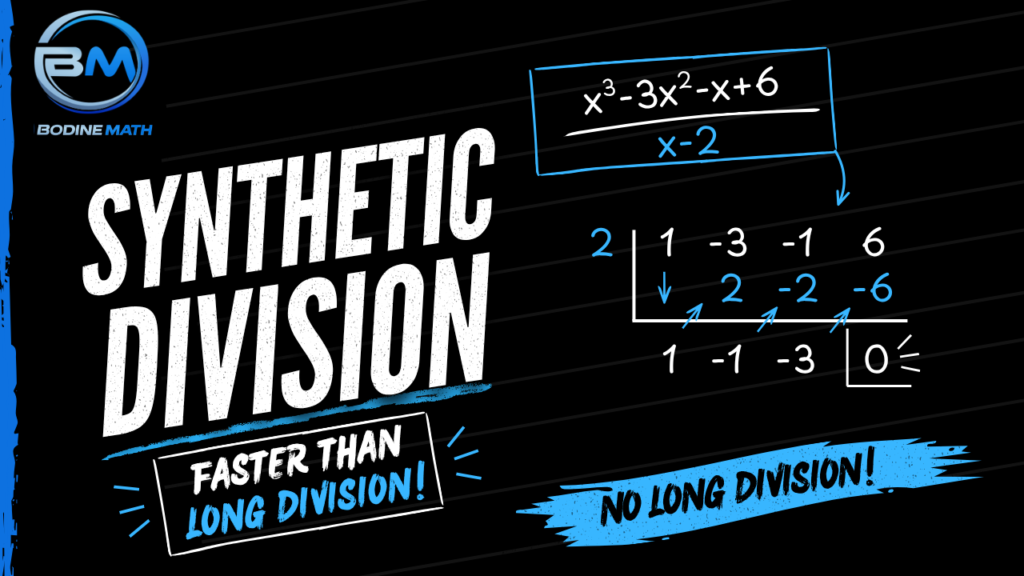
Synthetic division is one of the fastest ways to divide polynomials—and it’s much easier than traditional polynomial long division once you understand the process. In this video, you’ll learn how synthetic division works step-by-step, including how to set up the problem, what the numbers represent, and how the multiplication-and-addition pattern helps you find the quotient […]
Domain and Range Explained | Inputs and Outputs
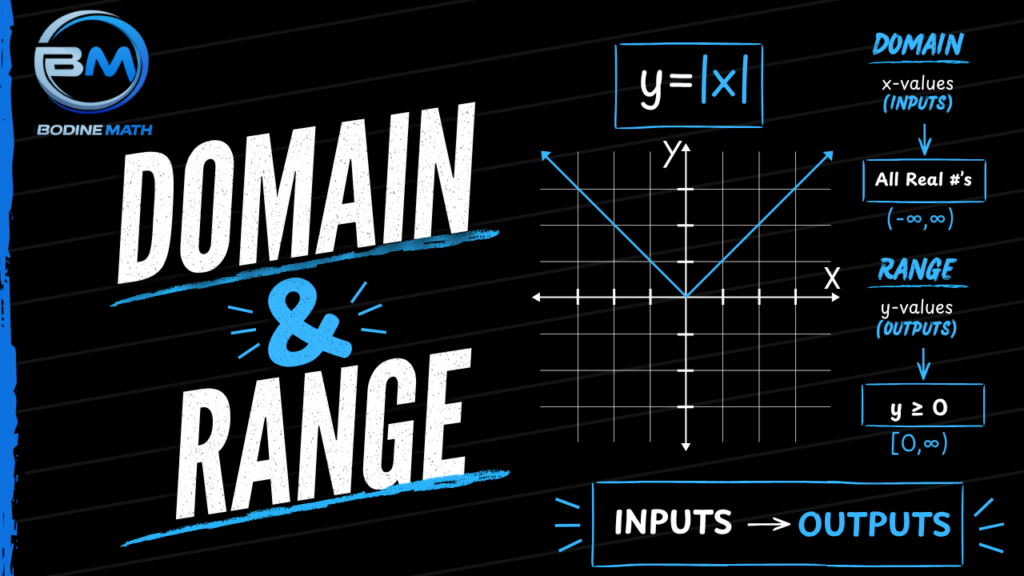
What do the linear function and the absolute value function have in common? More importantly, how are their domains and ranges different? In this video, we’ll introduce the concepts of domain and range by comparing two familiar functions: a linear function and an absolute value function. You’ll learn how domain represents the possible inputs (x-values) […]
How to Find Intervals of Increase and Decrease
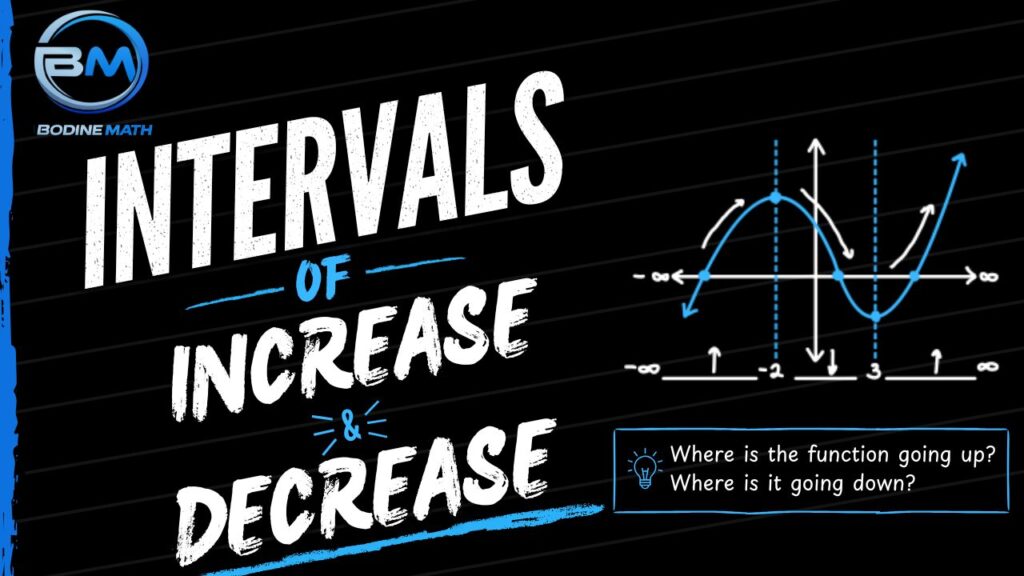
How can you tell if a function is increasing or decreasing? In this video, I show you a simple way to find intervals of increase and decrease by reading a graph from left to right. Instead of memorizing rules, you’ll learn how to recognize whether a function is moving upward or downward as the x-values […]
Squaring a Binomial: Why There’s a Middle Term
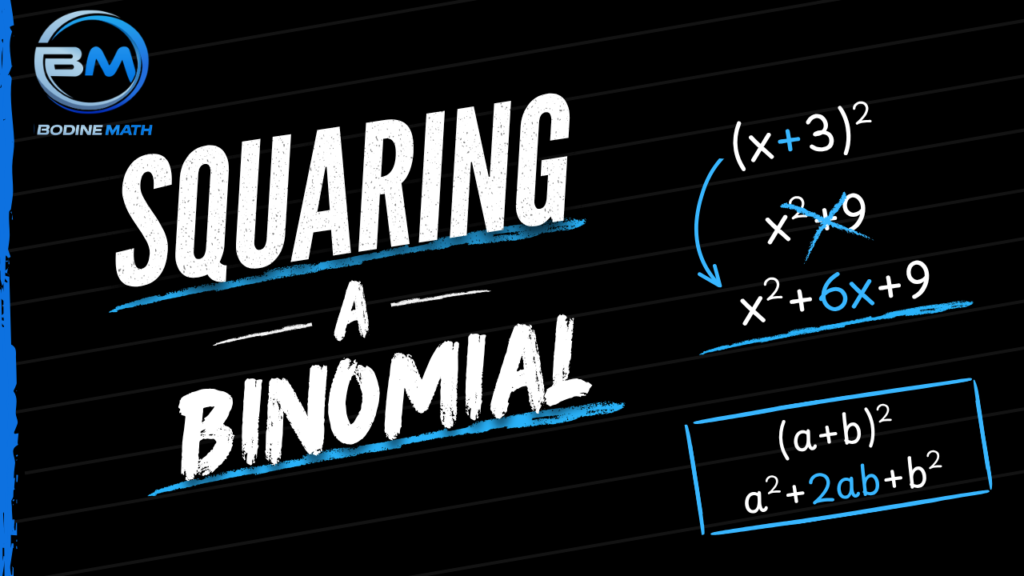
Why doesn’t (a+b)²+bx+c equal a²+b² ? In this video, I explain where the middle term comes from when squaring a binomial and why so many students make this common mistake. Instead of just memorizing a formula, you’ll see the logic behind the expansion and understand why the result includes the 2ab term. You’ll learn: • […]
3 Variable Systems: Turn It Into a 2 Variable System

In this video, you’ll learn how to solve systems of equations with three variables using a simple organizational trick. Three variable systems can look intimidating but once the system becomes a standard two-variable system, the solution becomes much easier to find. In this lesson you’ll learn: • How to organize a 3 variable system • […]
Factoring Trinomials When the Leading Coefficient is not 1
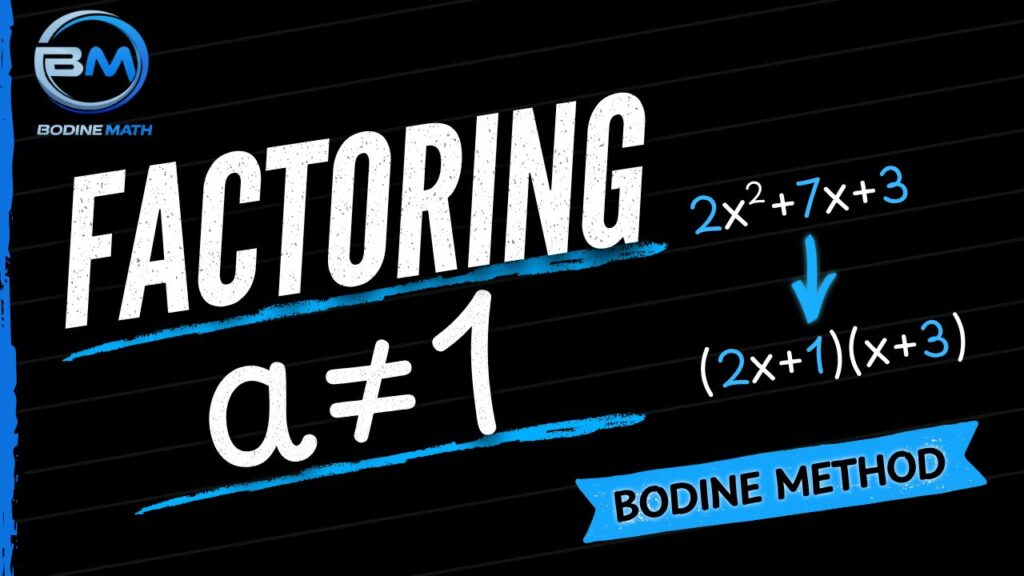
In this video, I show you how to factor trinomials when the leading coefficient isn’t 1 using the Bodine Method. Many students get stuck when the coefficient of x 2 is greater than 1, but this approach breaks the process into simple, logical steps that are easy to follow. You’ll learn: How to identify the […]