
Factoring the Sum and Difference of Cubes
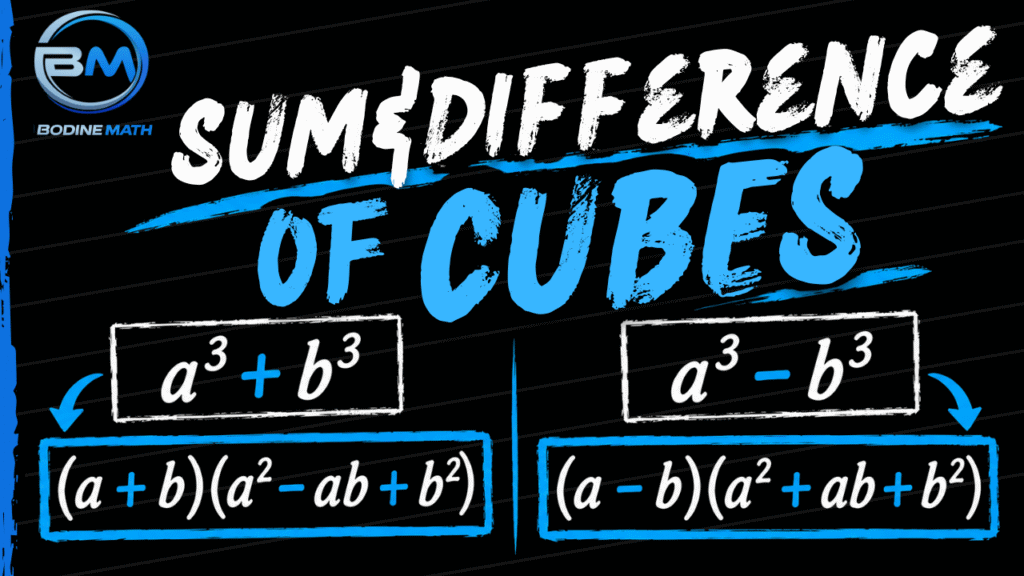
Most students learn to factor polynomials by finding the greatest common factor (GCF), factoring trinomials, or using the difference of squares. But what happens when you’re asked to factor an expression containing perfect cubes? Unlike the difference of squares, both the sum and difference of cubes can be factored using special patterns. In this video, […]
Factoring and Solving Polynomials by Grouping.
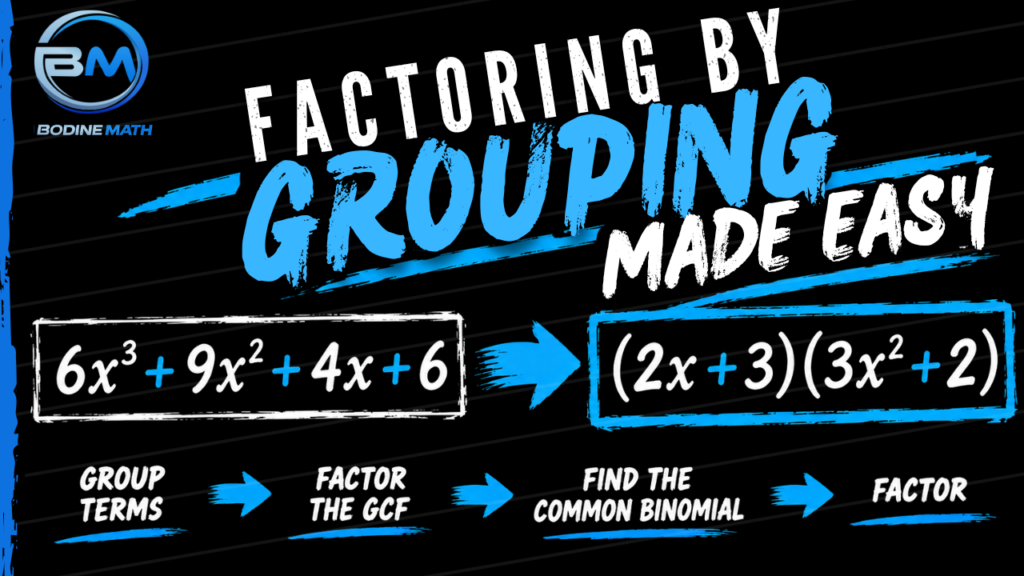
Factoring polynomials can be challenging, especially when an expression contains four terms instead of the usual two or three. But what if you could break a complicated polynomial into smaller groups and use something you already know—the greatest common factor (GCF)—to factor the entire expression? In this video, you’ll learn how to factor polynomials using […]
Pascal’s Triangle: The Efficient Way to Expand Binomials
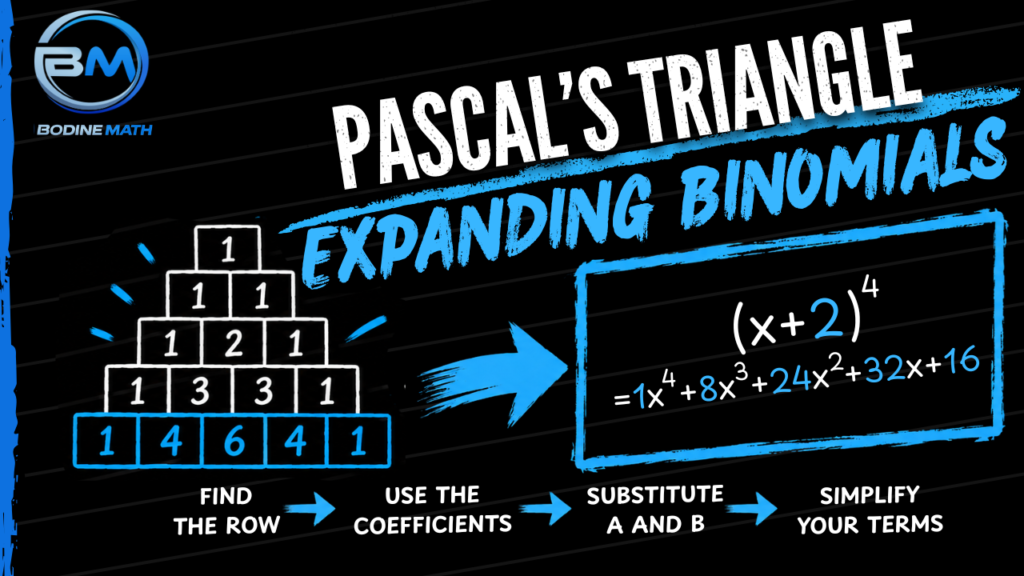
Most students learn to expand binomials by using the distributive property or FOIL. But what happens when you’re asked to expand a binomial raised to the fourth, fifth, or even sixth power? Multiplying binomials repeatedly can become complicated and time-consuming. What if there were a simple pattern that could make the process much easier? In […]
Inverse Trig vs Reciprocal Trig Functions
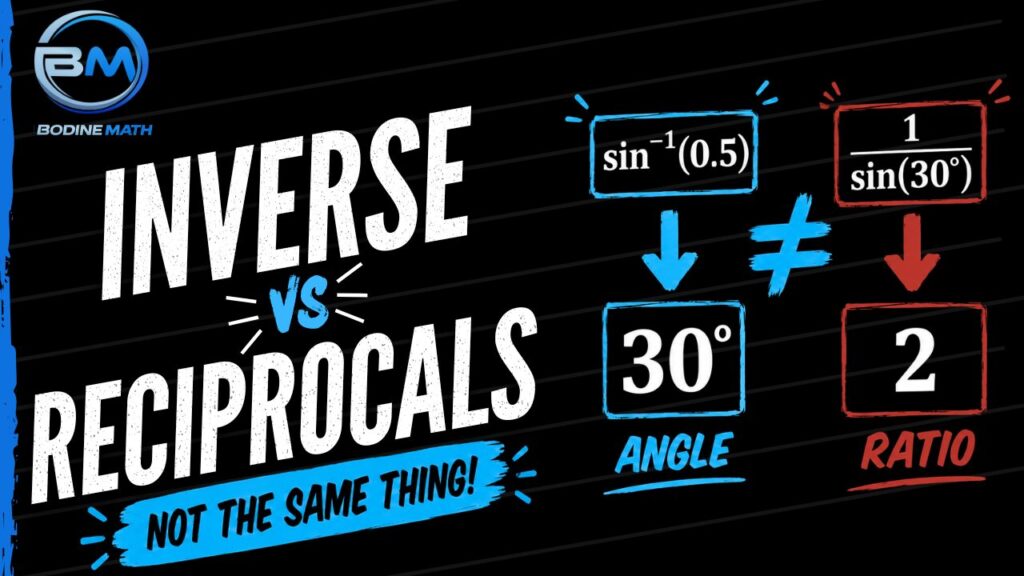
Many students think that sin⁻¹(x) means 1/sin(x) but these expressions represent two completely different ideas. In this video, you’ll learn the difference between inverse trigonometric functions and reciprocal trigonometric functions. We’ll compare inverse sine, inverse cosine, and inverse tangent to cosecant, secant, and cotangent so you can avoid one of the most common mistakes in […]
Simplifying Complex Fractions Step-by-Step
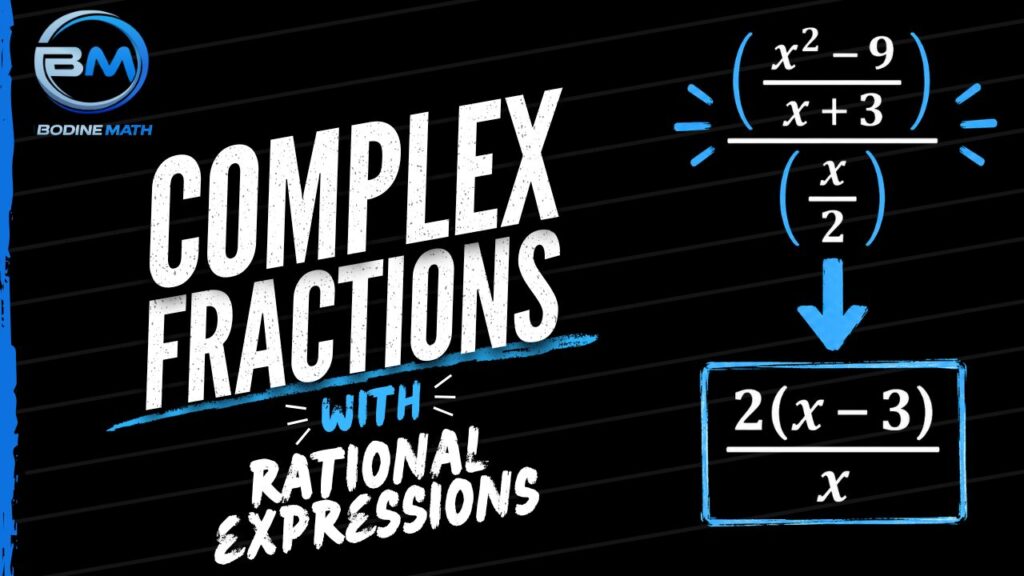
Complex fractions can look intimidating, but they’re really just a combination of algebra skills you’ve already learned. In this video, you’ll learn how to simplify complex fractions involving rational expressions by combining expressions, multiplying by the reciprocal, factoring, and canceling common factors. We’ll work through an example step-by-step and show how multiple algebra concepts come […]
Transformations of Functions | a, h, and k Explained
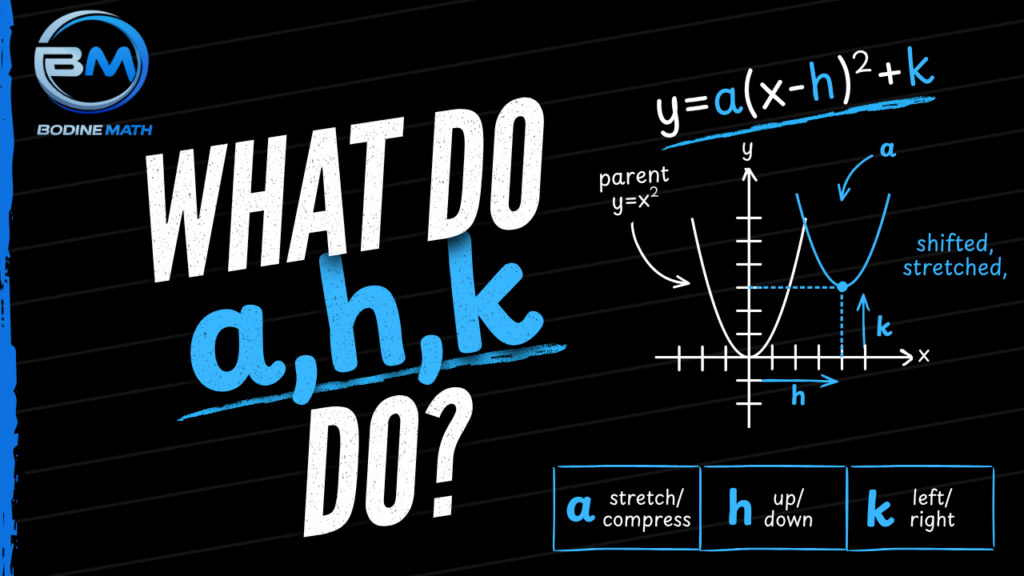
Have you ever looked at the equationcand wondered what the values of a, h, and k actually do? In this video, we’ll start with the parent function and explore how each parameter changes the graph. You’ll learn how to recognize vertical stretches and compressions, horizontal shifts, and vertical shifts without memorizing complicated rules. In this […]
Who Created the Quadratic Formula?
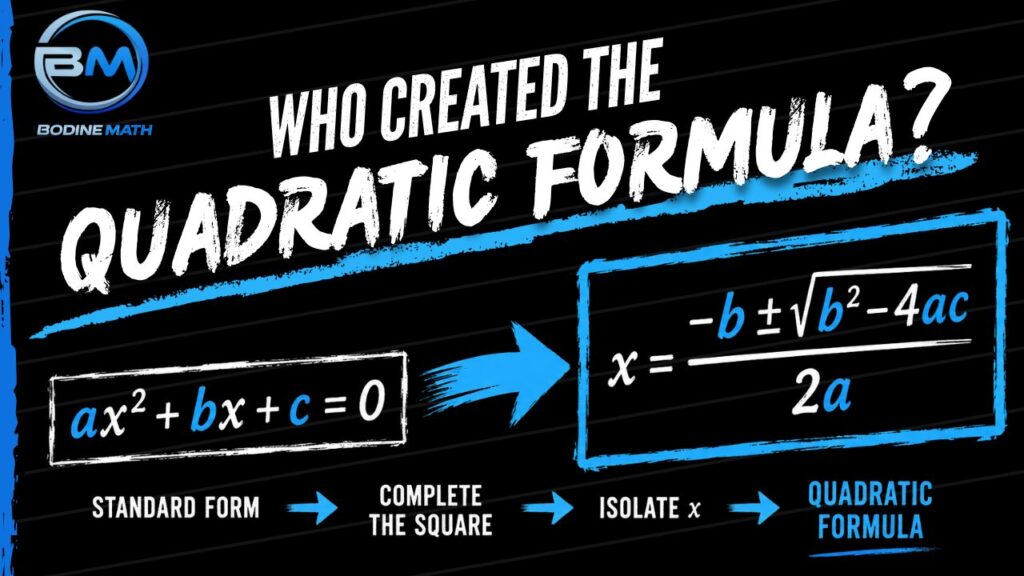
Did someone actually create the quadratic formula, or does it come from somewhere else? In this lesson, we’ll start with the standard form of a quadratic equation and use the process of completing the square to derive the quadratic formula step by step. You’ll see that the quadratic formula isn’t magic and wasn’t simply invented […]
Determining the Angle of Elevation vs Angle of Depression

Understanding the difference between angles of elevation and angles of depression is an important application of right triangle trigonometry. In this lesson, you’ll learn how to identify each angle, draw accurate diagrams, and use them in trigonometric ratios to solve real-world problems involving heights, distances, and angles. Topics covered: • Angle of elevation • Angle […]
How Do We Determine End Behavior

Understanding end behavior is one of the most important skills when graphing polynomial functions. In this video, you’ll learn how to determine what happens to a polynomial as x approaches positive infinity and negative infinity. We’ll focus on how the degree of the polynomial and the sign of the leading coefficient work together to determine […]
Why is there a ± for quadratics?
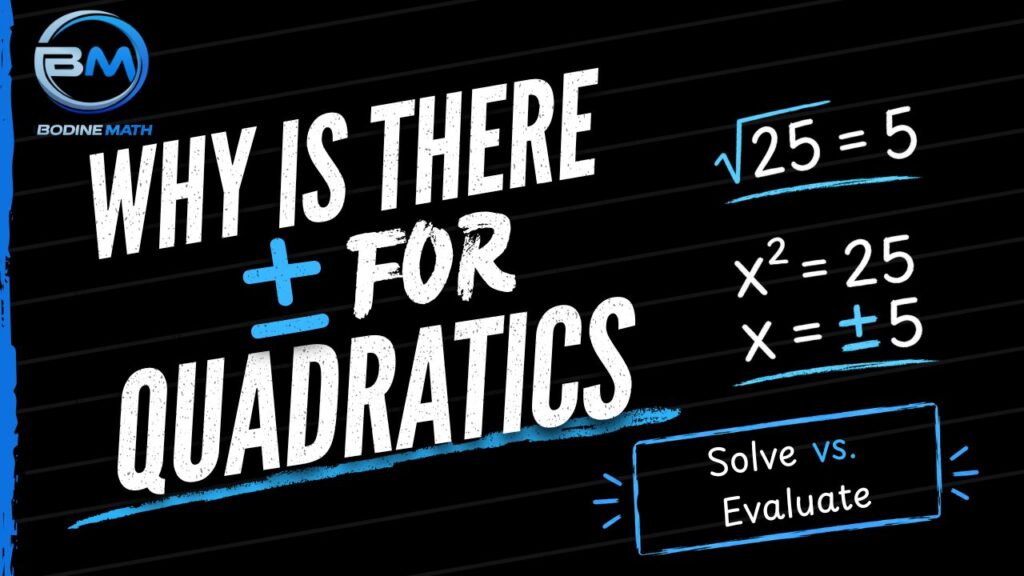
Why do we write ± when solving quadratic equations, but not when evaluating square roots? In this lesson, we’ll explore one of the most common misconceptions in algebra and uncover the reasoning behind it. You’ll learn how functions, inverses, and solving equations are connected, and why: ✔️ √25 = 5 ✔️ x² = 25 has […]