
Factoring the Sum and Difference of Cubes
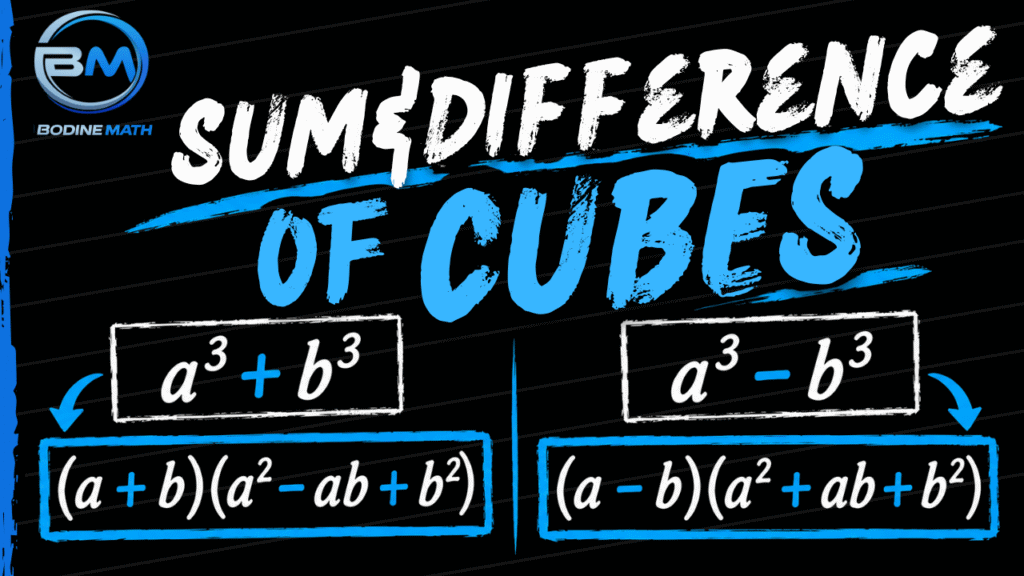
Most students learn to factor polynomials by finding the greatest common factor (GCF), factoring trinomials, or using the difference of squares. But what happens when you’re asked to factor an expression containing perfect cubes? Unlike the difference of squares, both the sum and difference of cubes can be factored using special patterns. In this video, […]
Factoring and Solving Polynomials by Grouping.
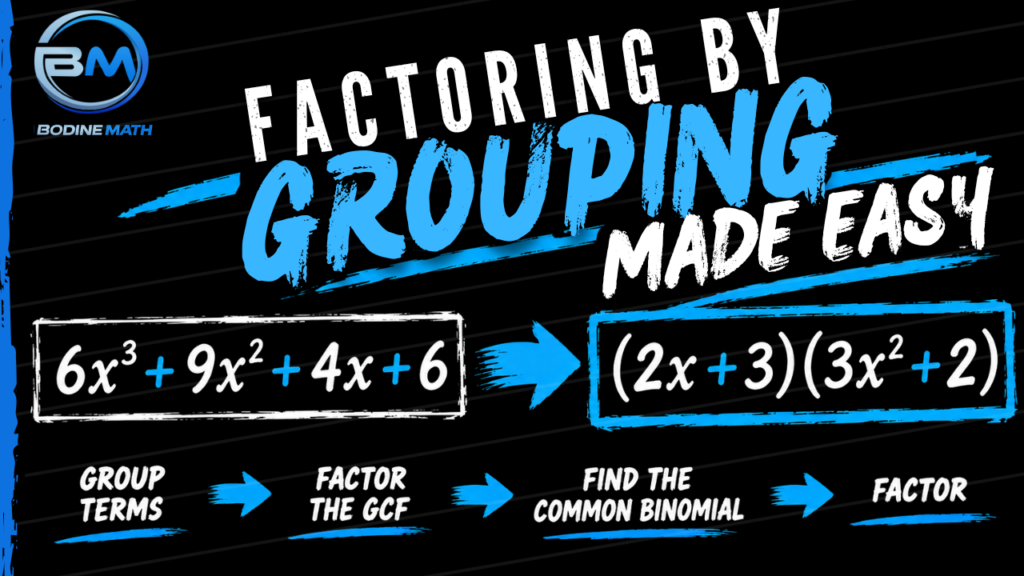
Factoring polynomials can be challenging, especially when an expression contains four terms instead of the usual two or three. But what if you could break a complicated polynomial into smaller groups and use something you already know—the greatest common factor (GCF)—to factor the entire expression? In this video, you’ll learn how to factor polynomials using […]
Pascal’s Triangle: The Efficient Way to Expand Binomials
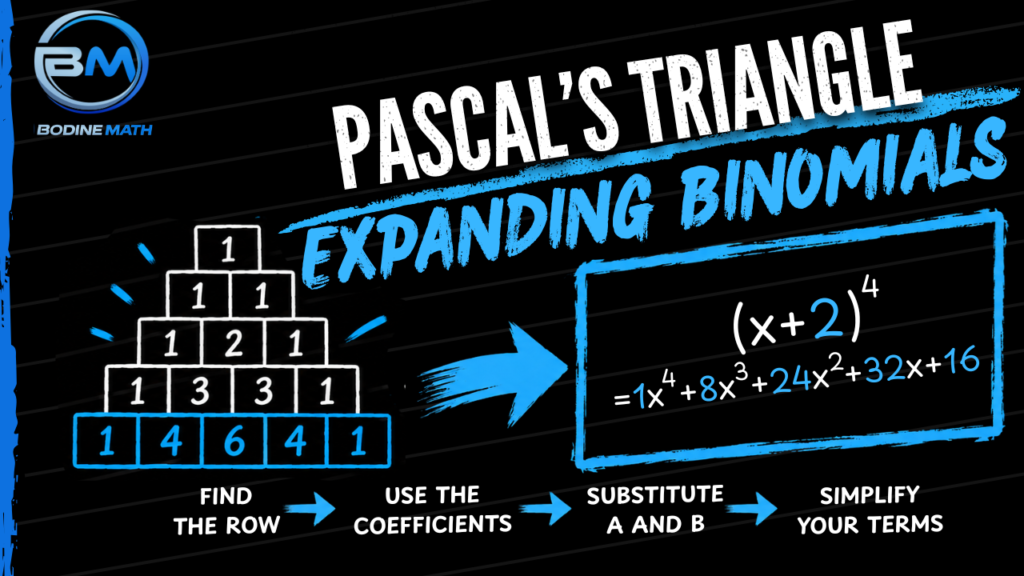
Most students learn to expand binomials by using the distributive property or FOIL. But what happens when you’re asked to expand a binomial raised to the fourth, fifth, or even sixth power? Multiplying binomials repeatedly can become complicated and time-consuming. What if there were a simple pattern that could make the process much easier? In […]
How Do We Determine End Behavior

Understanding end behavior is one of the most important skills when graphing polynomial functions. In this video, you’ll learn how to determine what happens to a polynomial as x approaches positive infinity and negative infinity. We’ll focus on how the degree of the polynomial and the sign of the leading coefficient work together to determine […]
Synthetic Division: Faster Than Long Division
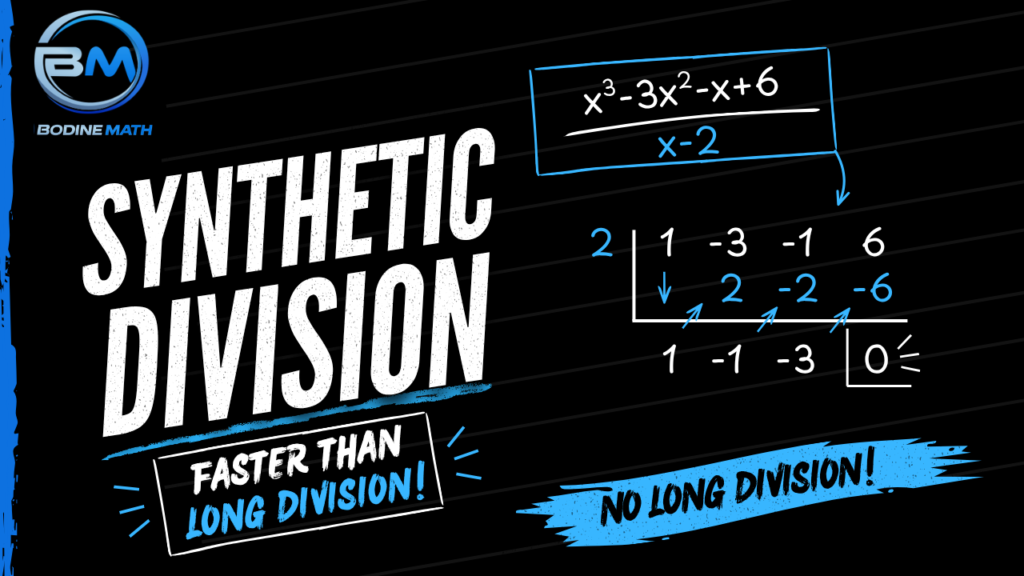
Synthetic division is one of the fastest ways to divide polynomials—and it’s much easier than traditional polynomial long division once you understand the process. In this video, you’ll learn how synthetic division works step-by-step, including how to set up the problem, what the numbers represent, and how the multiplication-and-addition pattern helps you find the quotient […]