Some would try once, get it wrong, and immediately shut down.
They’d say: “I don’t get it. I give up.”
They weren’t stuck because they were bad at math. They were stuck because they were quitting halfway through the process.
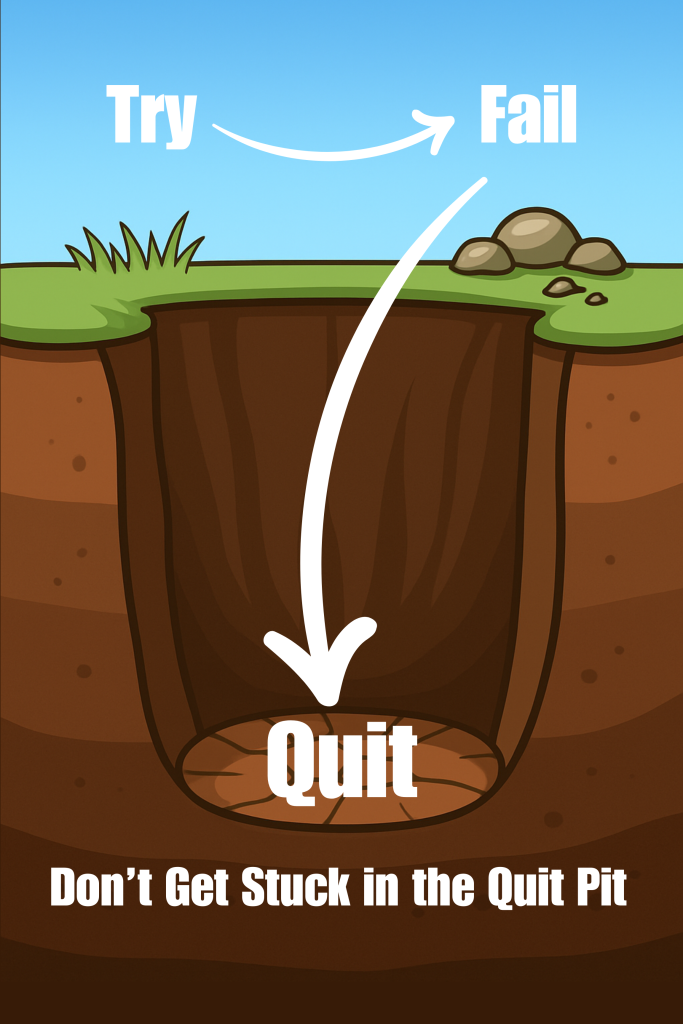
After seeing this pattern over and over, I finally said: “You guys are getting stuck in the Quit Pit.”
They laughed but I wasn’t joking.
The other side of The Try Cycle™, The Quit Pit™, was born.
The Quit Pit™ runs on one dangerous belief:
“If I don’t get it right away, I must be bad at this.”
So instead of fixing mistakes, students:
• avoid trying again • protect their ego • scroll their phone • stop participating • quit before learning happens
Not because they can’t improve…but because quitting feels safer than failing twice.
What The Quit Pit™ Actually Is
The Quit Pit™ isn’t laziness. It isn’t low intelligence. It isn’t a lack of ability.
It’s a habit loop.
It looks like this:
Try → Fail → Quit → Disengage
Students attempt one problem
• Get it wrong • Feel stupid • Feel frustrated • Decide they “can’t do it” • Stop trying altogether
And the longer they stay in that loop, the deeper the pit gets.
The Lie Students Start Believing
The Quit Pit™ trains students to believe one dangerous lie: “If I don’t get it right away, I must be bad at this.”
So instead of learning from mistakes, they:
• Avoid hard problems • Refuse to ask questions • Disengage • Hide behind “I don’t get it” • Wait for the teacher to rescue them • Scroll their phone • Do nothing
Not because they can’t try again…but because quitting feels safer than failing twice.
I ask my students constantly, “How do you get better at math?” and they begrudgingly respond, “Practice”